Business Model Canvas: A Moment to Rethink, Refocus, and Connect
Business Model Canvas: A Moment to Rethink, Refocus, and Connect
A business model can feel clear when you’re building it from experience. But taking time to lay out its parts customers, value, channels, relationships, revenue, activities, resources, partners, and costs can reveal new questions and opportunities.
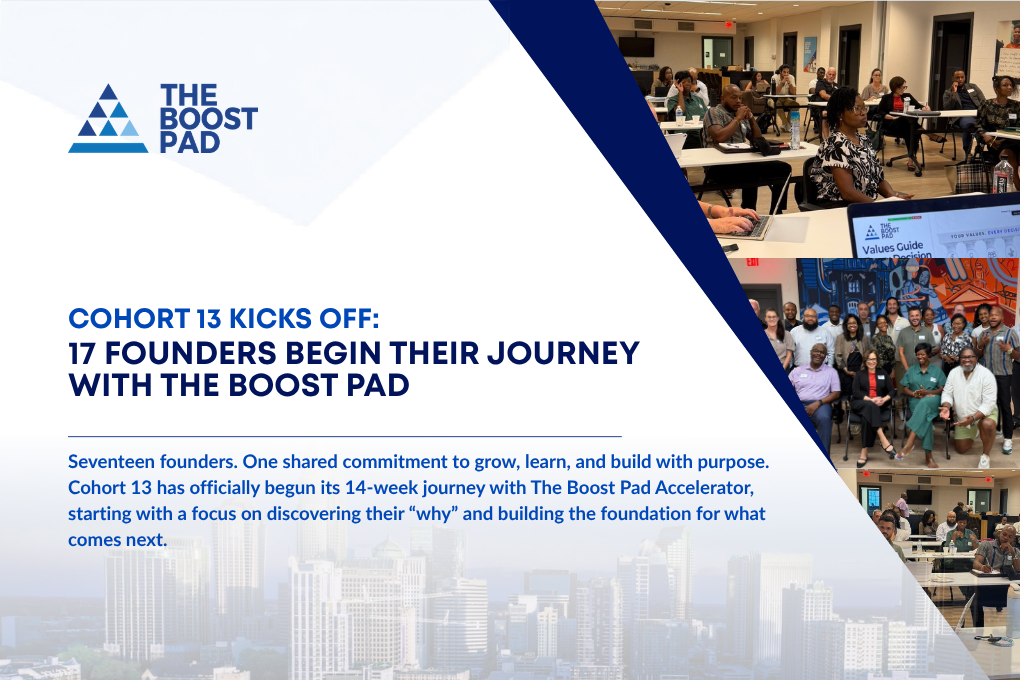
That was the experience for Cohort 13 founders during Saturday’s Business Model Canvas lesson. The session gave them time to step back from day-to-day work, examine how their businesses fit together, and identify where they want to focus next.
The founders’ reflections showed how differently that process can land from one business to another.
Looking again at what makes the business different
Linda Hope, founder of Break It Down Productions LLC, works with higher education institutions to help students prepare for college math. As she reviewed the canvas, she focused on the outcomes her company produces and how its channels should communicate that value. She is considering ways to reach higher education customers through peer-reviewed articles and conferences focused on math and student success.
Linda shared that, even with an MBA, the exercise is prompting her to rethink how she approaches her business. She sees the Boost Pad as helping prepare the business for success in the same way her company works to prepare students for college success.
Making room to focus on the customer relationship
For Tyler GreenPope, founder and Chief Calm Officer of Calmbination, the most meaningful part of the canvas was customer relationships. Calmbination helps people create their own version of calm through breathwork, meditation, and sound healing. Tyler reflected on the value of creating wellness programs for partners such as yoga studios and other wellness providers.
He also described the value of having dedicated time each week to pause and focus on the business. The session helped him reconnect his customer relationships and partnerships to the work Calmbination offers.
Shifting from industry experience to business ownership
Sharon Scott, founder and CEO of SourceDox, brings more than 25 years of experience in clinical research to her new venture: a clinical trial execution platform for biotech companies, CROs, and sponsors.
Her focus during the canvas activity was revenue streams. After working within companies in the industry, she is now examining how revenue will come into her own business. Sharon said the Boost Pad has helped her build confidence and think about decisions from the perspective of a business owner.
Clarifying the activity at the center of the business
Juwan Johnson founded RENT704, a verification-first listing platform for the Charlotte metro area. His reflection centered on key activities. For RENT704, verifying listings and representing people accurately are essential to the business.
Juwan said the Boost Pad helped him clarify where the business is headed, isolate that essential activity, and decide where to focus most of his time.
Seeing partners as part of the growth plan
Nick Sullivan, founder of Gr(ai)n AI, focused on key partners. His business installs service crew members in small businesses, and he sees local partners as important to getting the product in front of business owners and supporting their long-term growth.
Nick named organizations and groups across the local ecosystem—including Mecklenburg County, the City of Charlotte, banks that lend to small businesses, and brokers who help buy and sell businesses. His reflection highlighted how many people have a shared interest in helping local businesses become sustainable and valuable.
Bringing the cost structure into focus
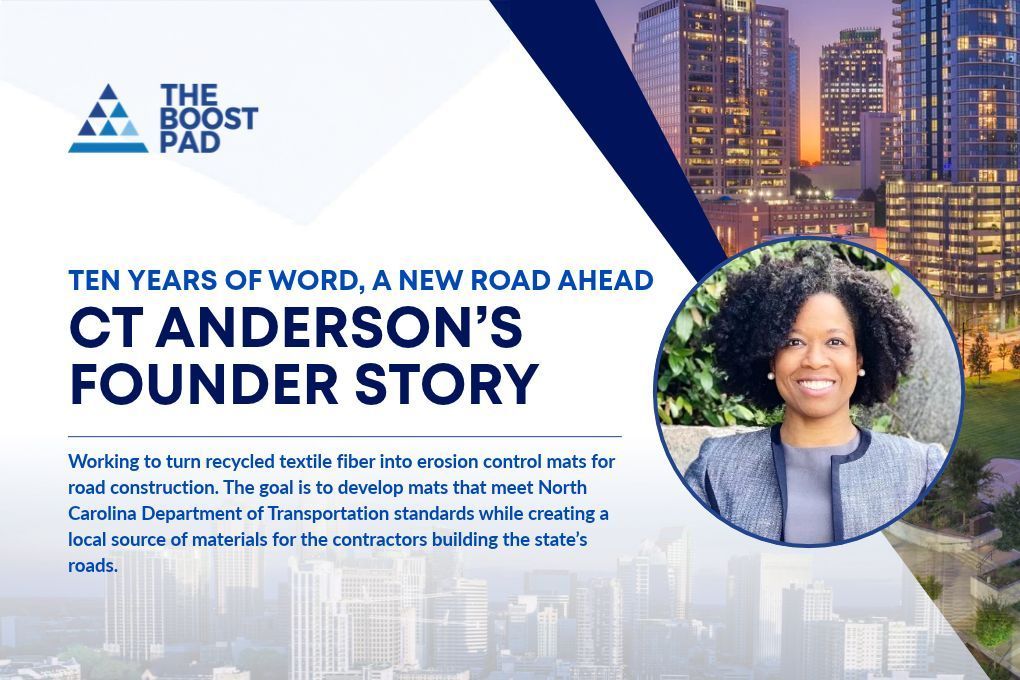
CT Anderson of Next Round Recycling makes products for the built environment from post-consumer textile material, starting with erosion control mats for highway construction. The cost structure section prompted CT to distinguish between variable and fixed costs.
CT identified production and raw materials as important costs, along with product liability insurance. The exercise brought practical financial considerations into focus alongside the environmental and product opportunity.
Reconnecting with the customer
For Ebony Stubbs, owner of Rae Images Headshots and Personal Branding Photography Studio, the customer segment section stood out. She reflected on how understanding primary customers shapes not only how a business is built, but also how it grows and evolves.
Ebony said the session helped her reconnect with the customers she most wants to serve and gain clarity around how she wants to show up as a CEO and continue growing her business.
A canvas that supports continued reflection
Each founder came to the canvas with a different question. For one, it was how to communicate the company’s outcomes. For another, it was customer relationships, revenue, key activities, partners, costs, or customer segments.
Together, their reflections show the value of making time to examine the business as a connected system. The Business Model Canvas gave Cohort 13 founders a structure for asking focused questions and identifying what deserves attention next.
We’re grateful for our partners and community organizations.
Do Greater Charlotte (@dogreater), NC IDEA (@nc.idea), Ally (@ally), Bank of America (@bankofamerica), Real Talk Counseling (@realtalkcounseling), Aspire Community Capital (@aspirecommunitycapital) and more...
Founder Stories & Startup Wins — The Boost Pad